































The complete guide to exporting Twitter/X data (2026)
Twitter became X, the free API disappeared and the in-app tools stayed thin. Yet the reasons to get data out of X never went away: a report for a client, a research dataset, a backup of years of your own writing, or a saved-for-later pile of bookmarks. This guide covers the practical ways to do each of them in 2026, with and without an extension.
How to export all tweets from a user
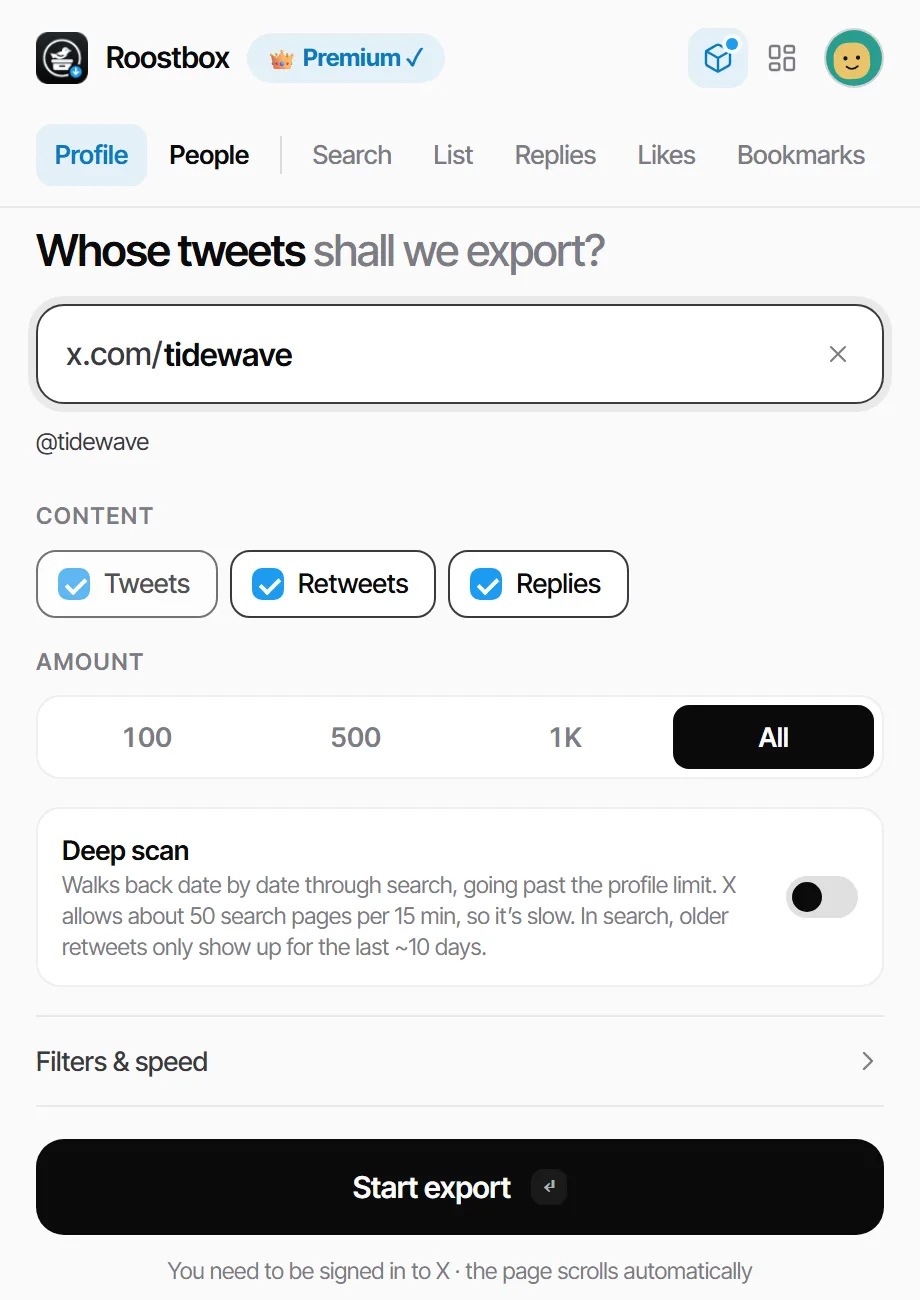
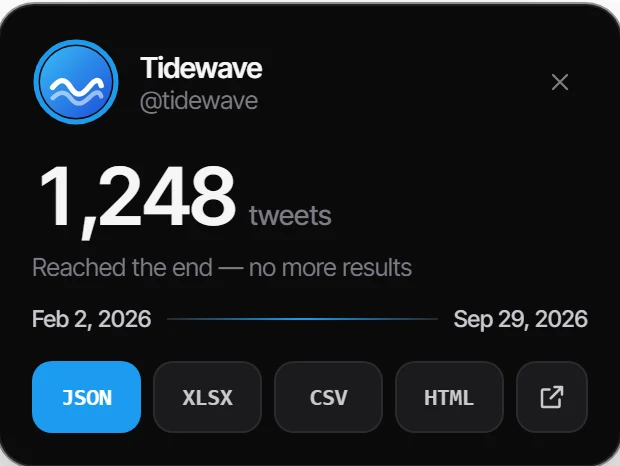
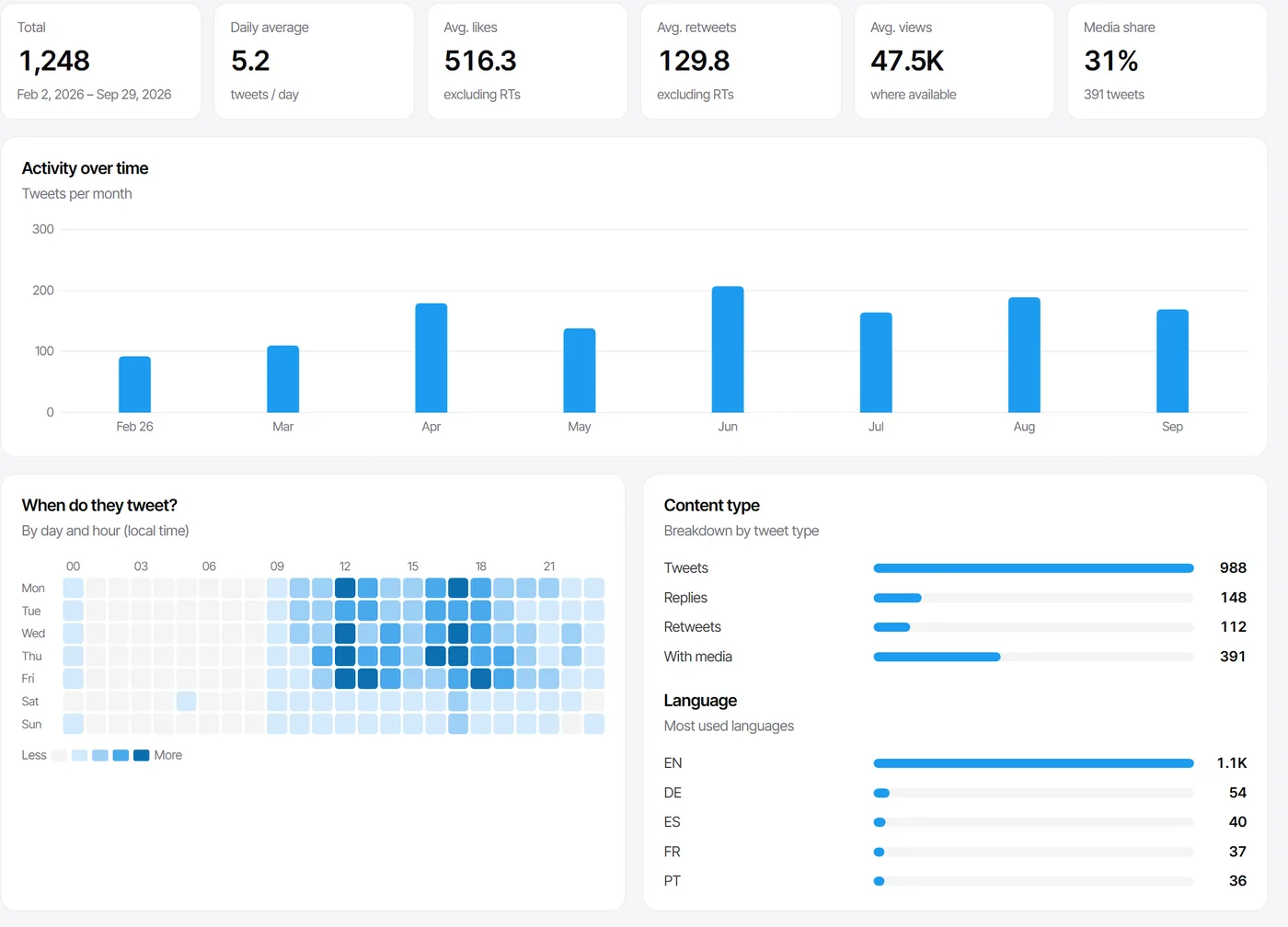
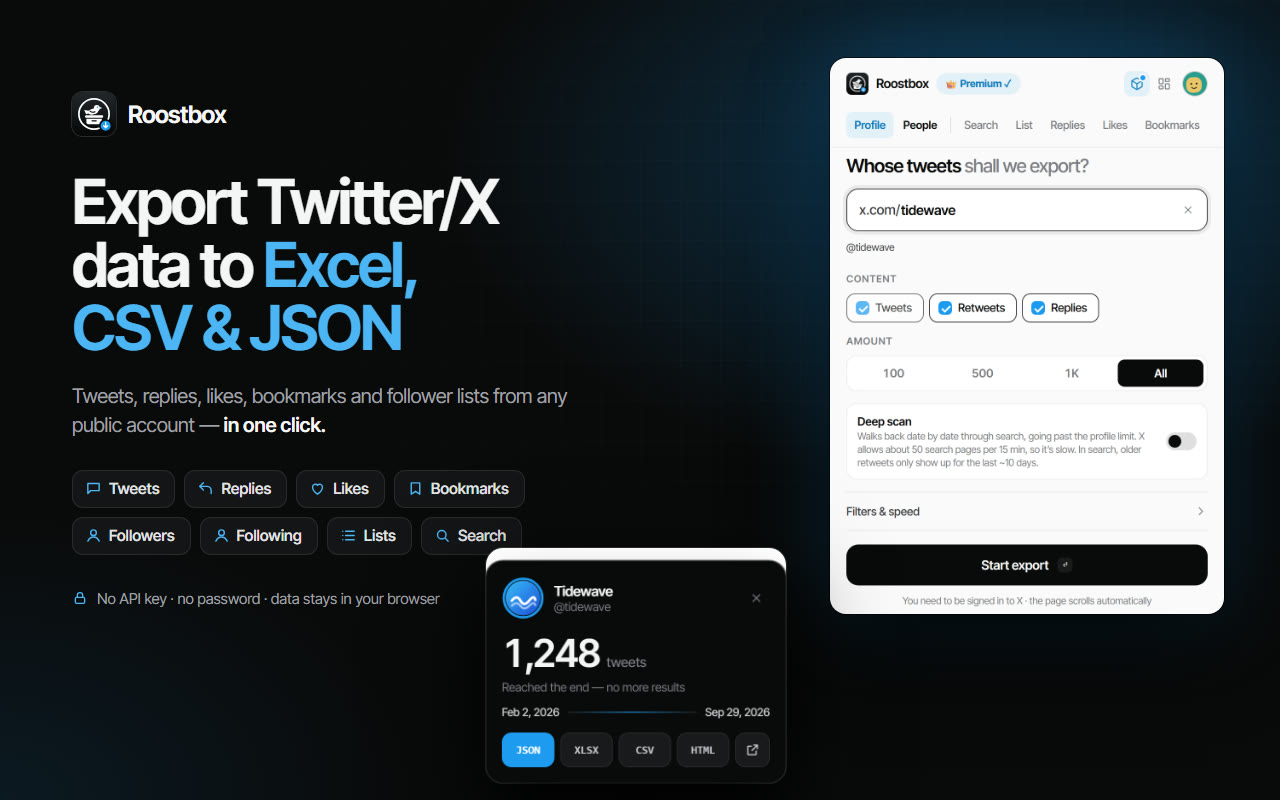
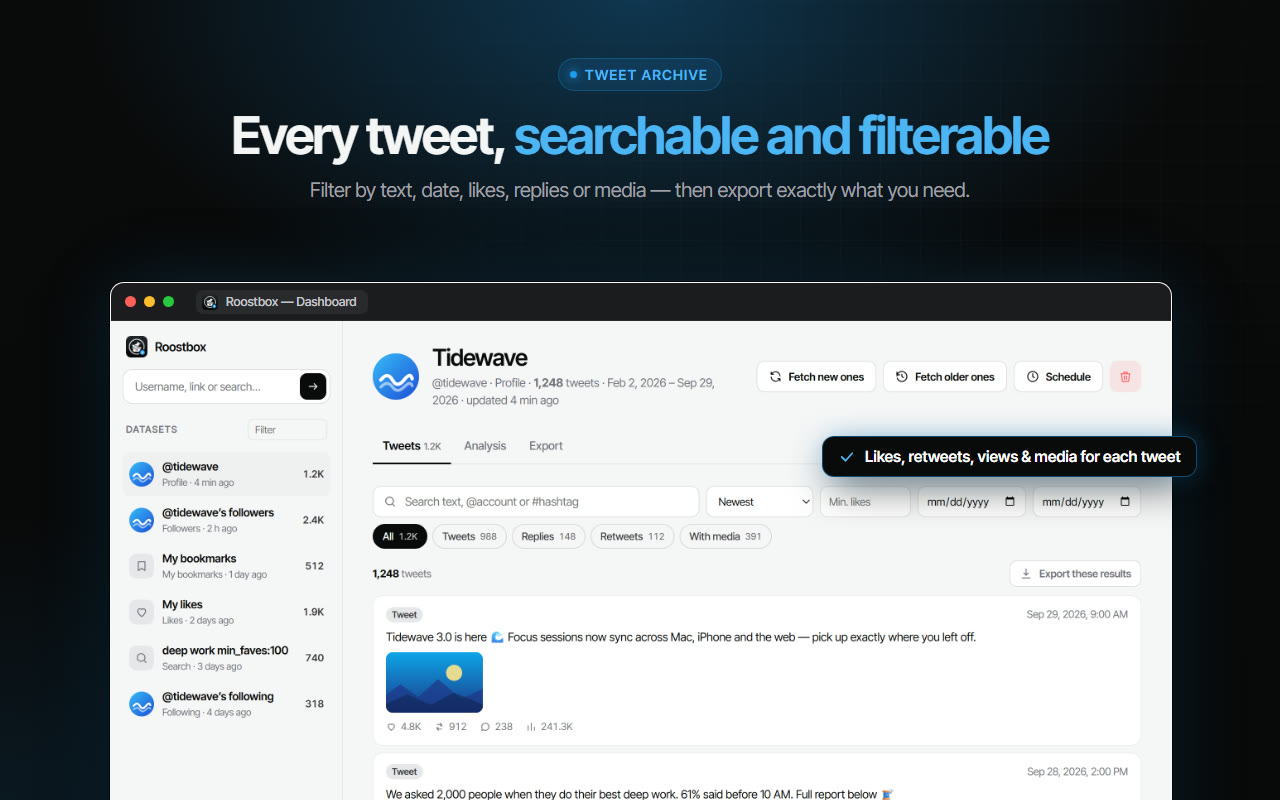
X has no export button on a profile, and scrolling by hand stops being realistic after a few hundred tweets. A Twitter exporter like Roostbox automates the scroll: enter the username, choose whether to include retweets and replies, and let it collect everything the profile shows. For accounts with tens of thousands of tweets, the profile timeline eventually stops loading older posts; that is where a deep scan through X search helps, walking back one date range at a time until it reaches the first tweet.
How to download your Twitter archive the official way
For your own account, X offers Settings → Your account → Download an archive of your data. You confirm your password, wait (often a day or more), and receive a ZIP of JavaScript data files plus a basic viewer. It is thorough for your own account, including direct messages, but it cannot export anyone else's tweets, your bookmarks or a follower list, and the data files need converting before a spreadsheet can use them. Many people request the official archive once and use an exporter for everything else.
How to export Twitter bookmarks
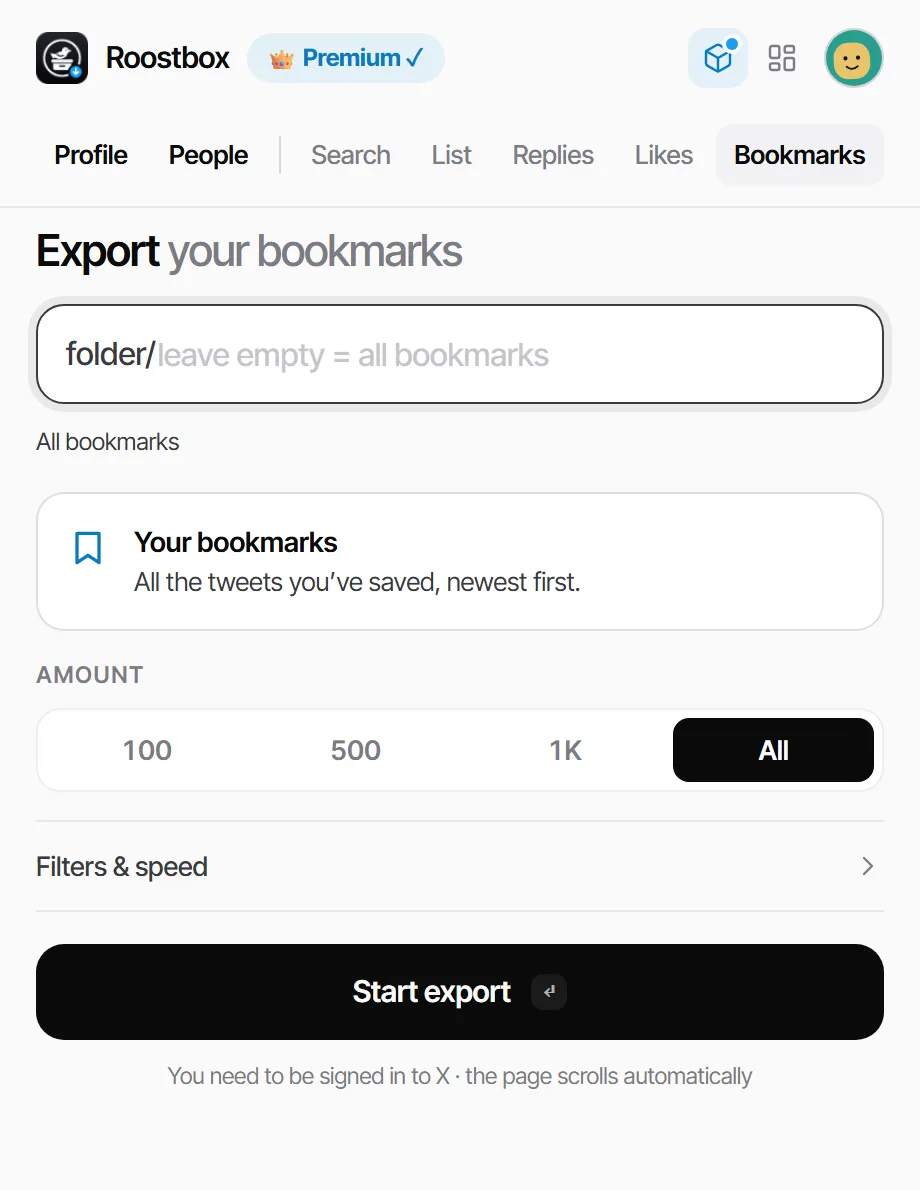
Bookmarks are private to you, which is why most online tools cannot reach them. Because Roostbox runs inside your own browser session, it can: open the Bookmarks tab, optionally paste a folder link, and export. Markdown and Notion are the popular destinations for bookmarks, since they turn a feed you never revisit into notes you can actually search.
How to export Twitter followers to CSV
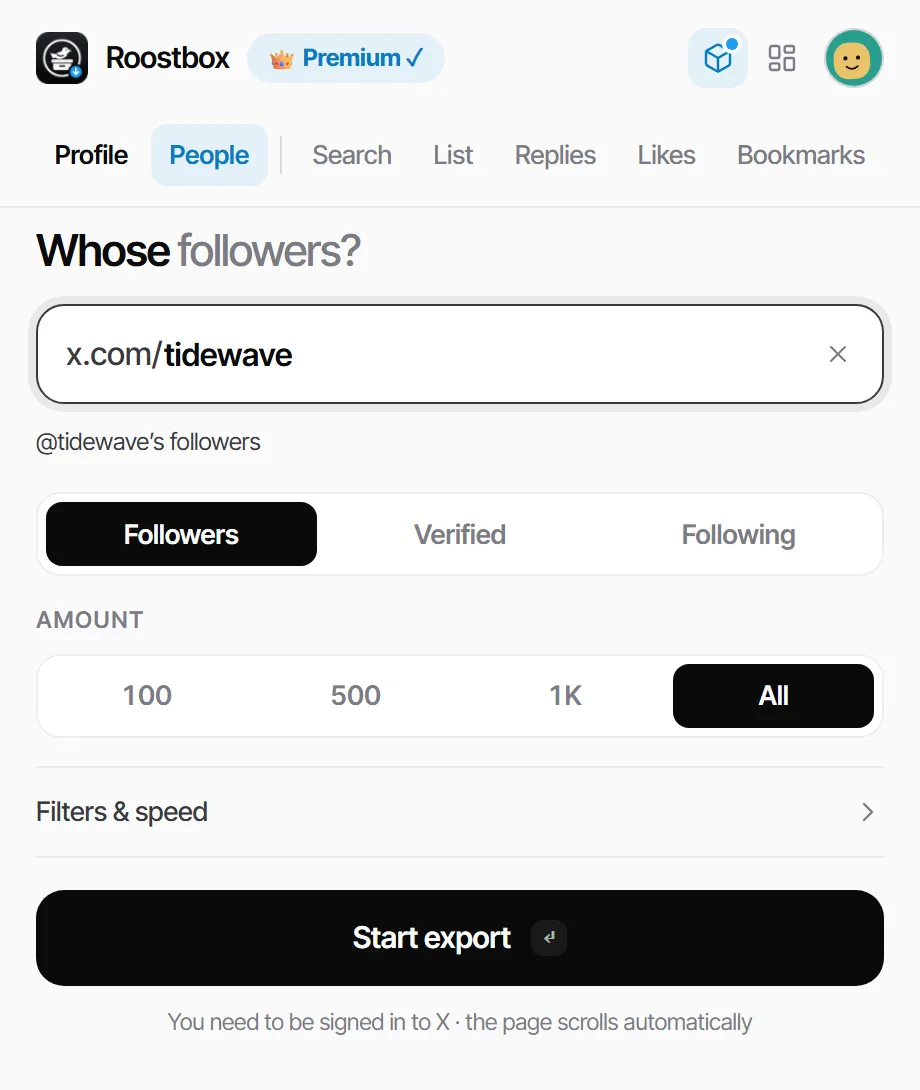
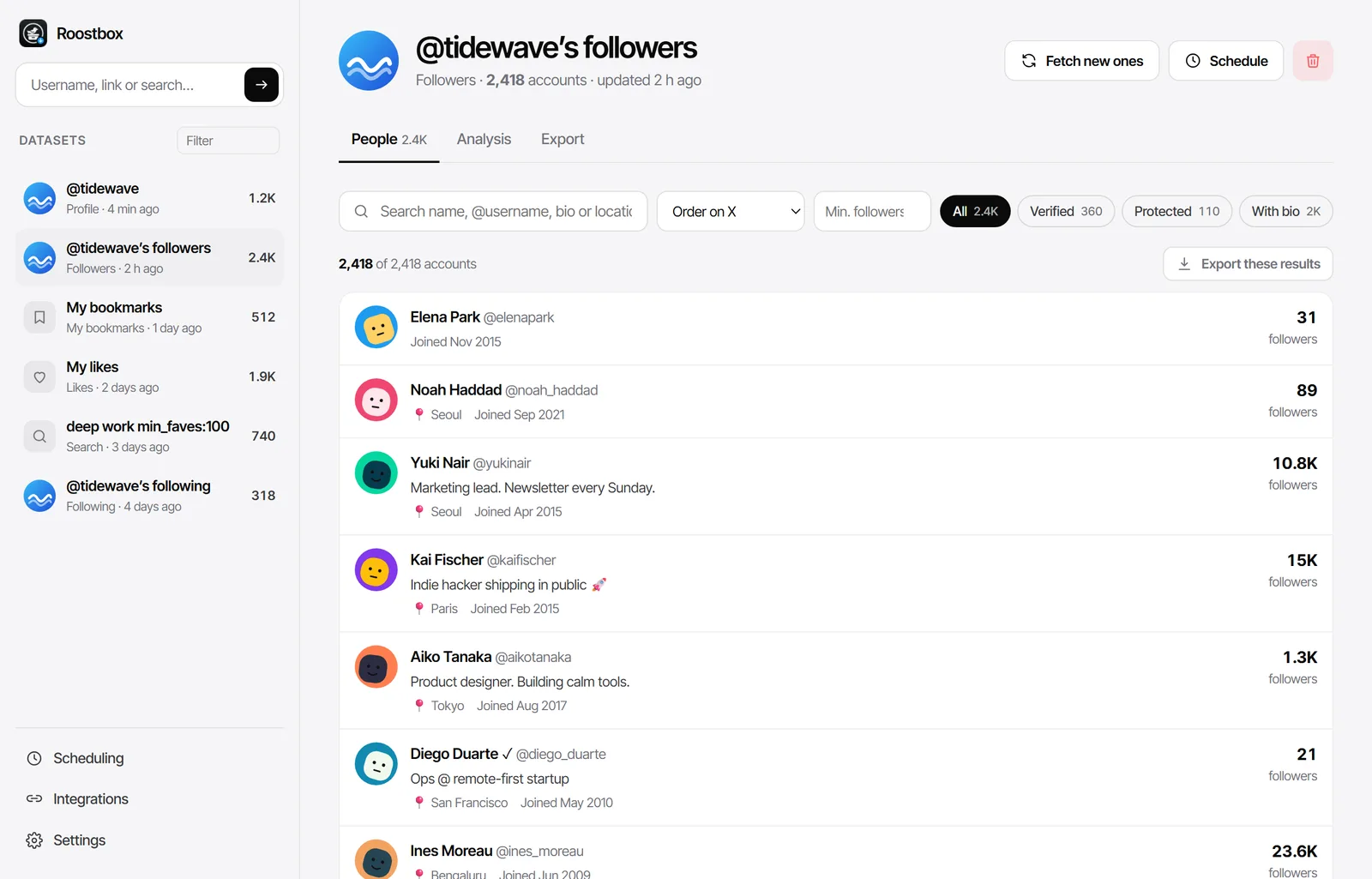
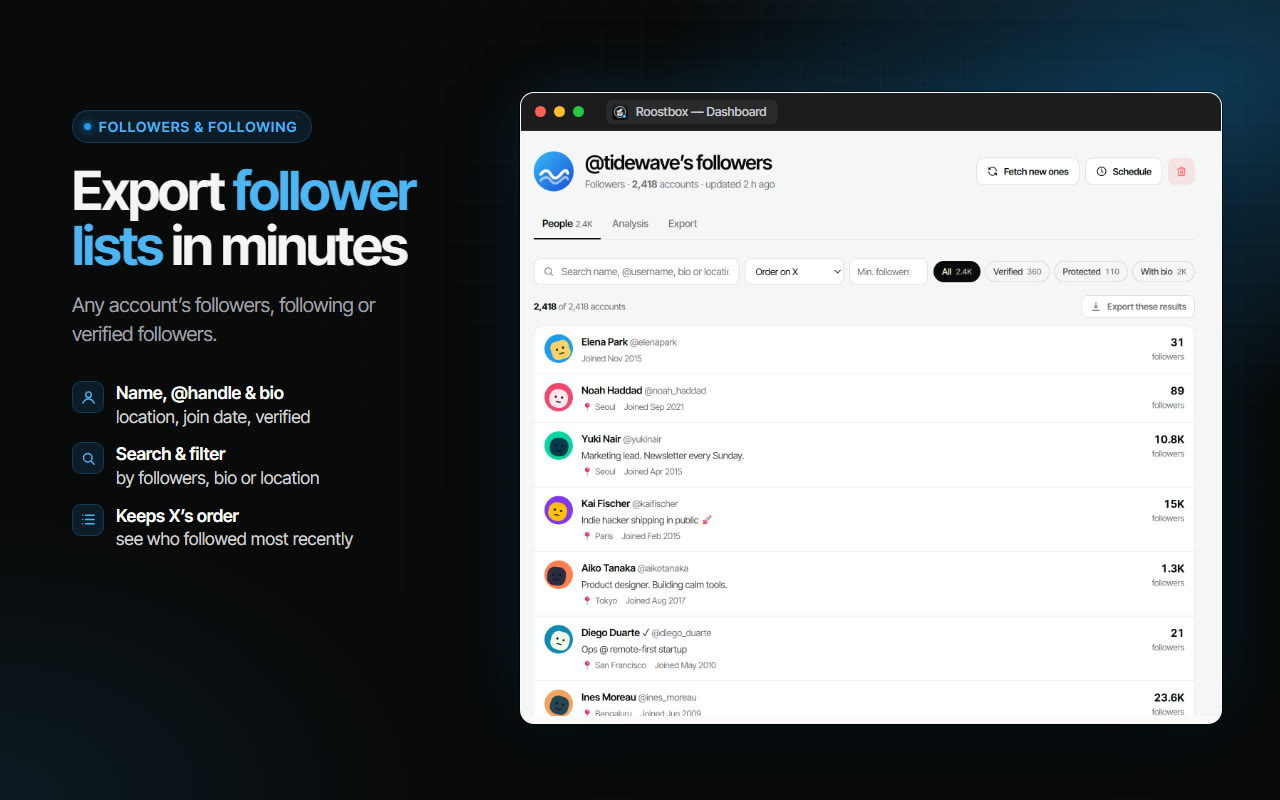
Use the People tab, enter the account and choose followers, verified followers or following. The result is a table with one account per row. Keep in mind that X serves your own follower list in full but may cut another account's list short on the web; a good exporter reports that instead of handing you a quietly incomplete file. If what you really want is to clean up who you follow, an inactive follower check is the better starting point.
Scraping Twitter without code
Searches for "Twitter scraper" usually lead to Python libraries and paid APIs. They are powerful, but they need setup, keys and upkeep every time X changes. A browser extension scrapes the same public data through the page you are already looking at, so there is nothing to host or maintain. JSON and JSONL exports make the result easy to load into pandas, a database or an AI pipeline.
Excel, CSV or JSON — which format to choose
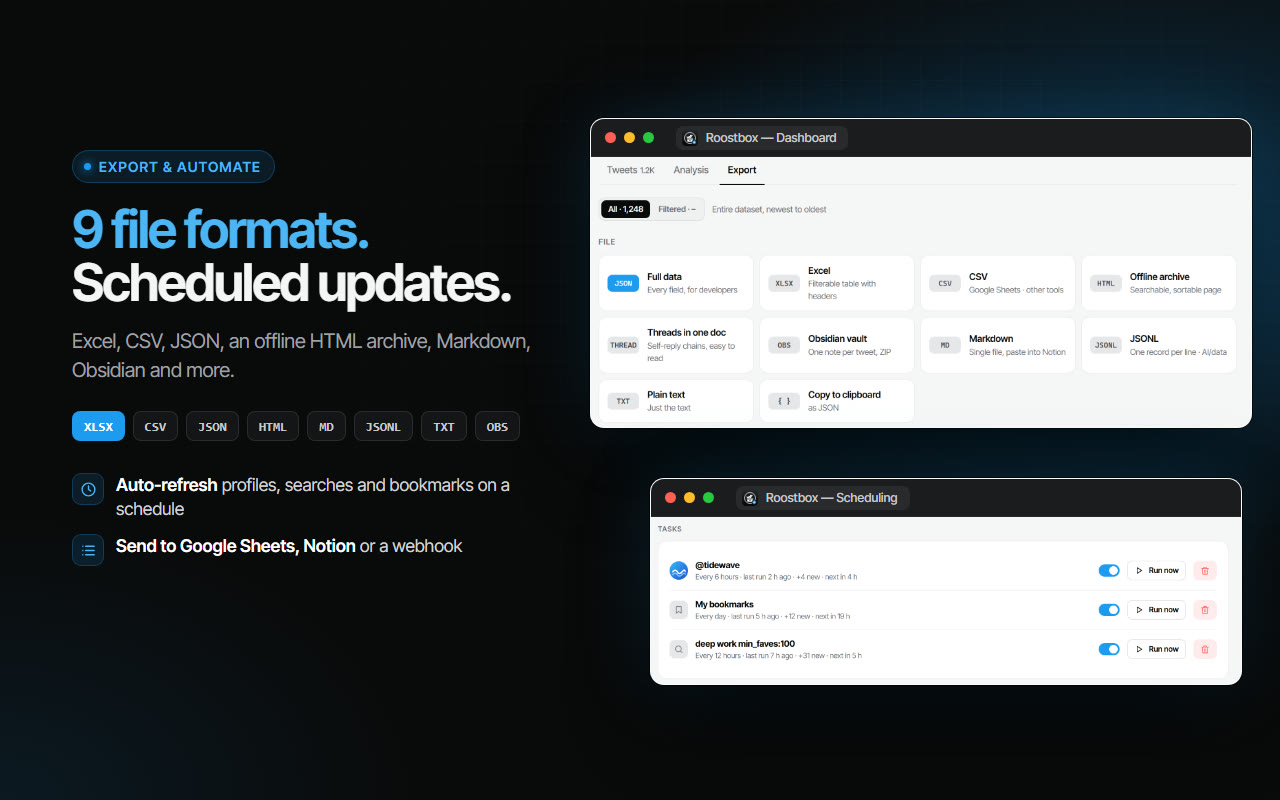
Choose Excel when a person will read the file: it keeps the columns typed and ready to filter. Choose CSV for Google Sheets or for importing into another tool. Choose JSON when code will read it, because it keeps every field, including nested ones like media and quoted tweets. For reading rather than analysing, the offline HTML archive and the Markdown export are easier on the eyes.
Tips for large exports
- Keep the X tab visible while an export runs; X does not load new tweets in a hidden tab.
- Use the date filters in X search (
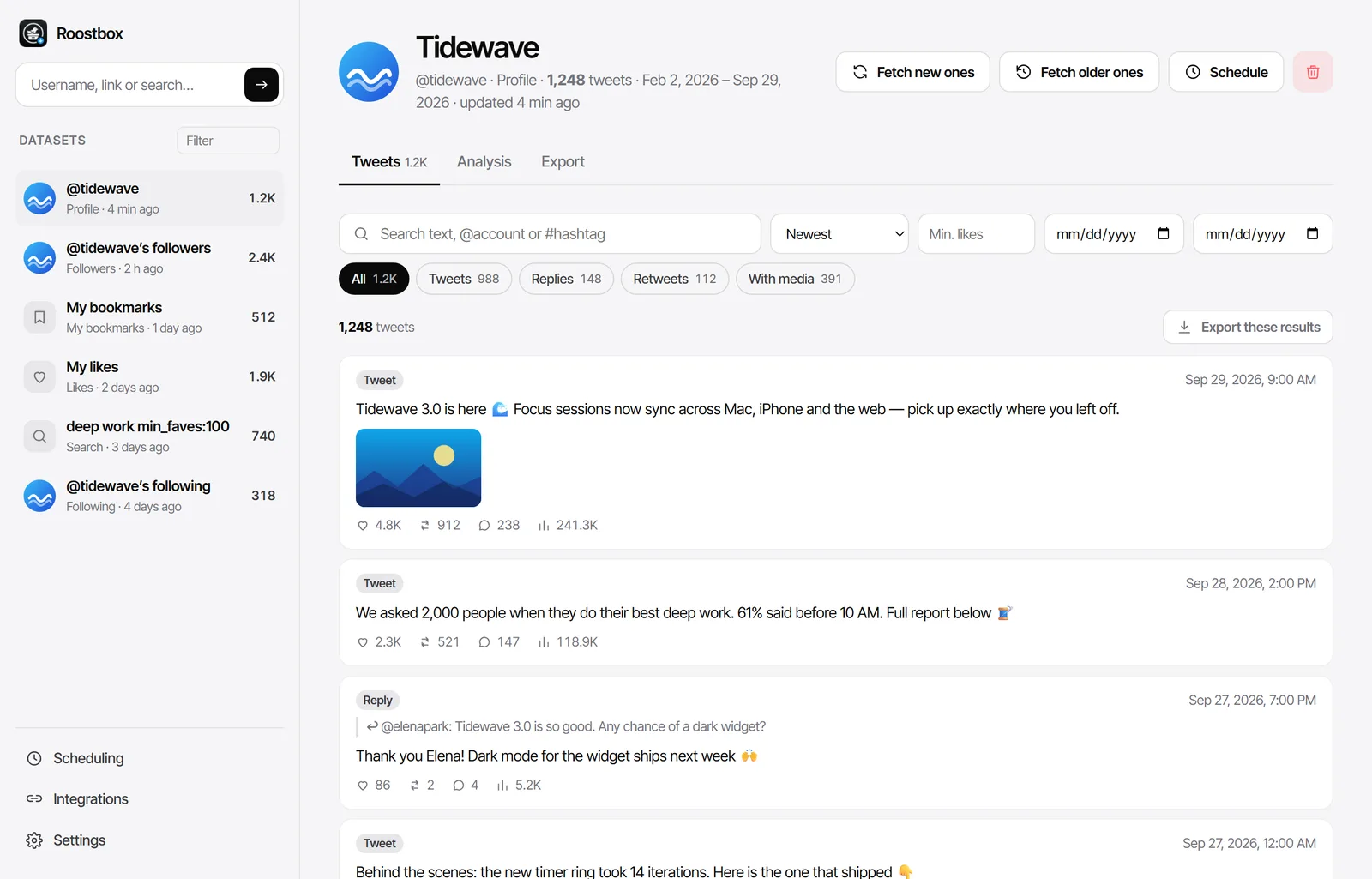
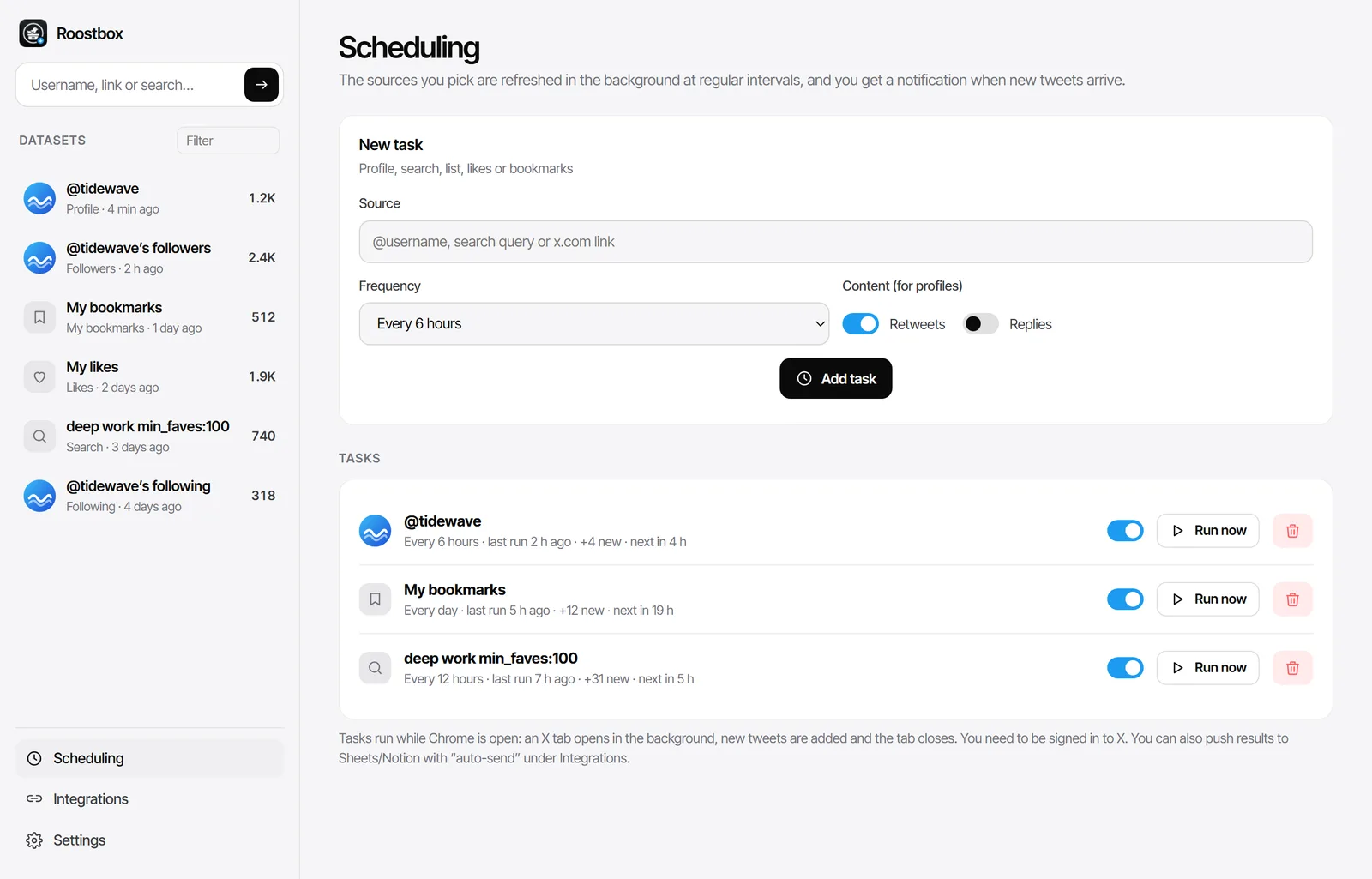
since:anduntil:) to split a huge account into smaller exports. - Refresh an existing export with Fetch new ones instead of exporting the whole account again.
- Mass actions have their own risks on X — read the mistakes that hurt an account before automating anything.